

If you’re deciding between glossy vs matte paint, it’s important to understand how each finish performs in different spaces.
Matt paint is usually the better choice for a soft, low-sheen finish on walls and ceilings. Gloss paint, by contrast, is often used on doors, trims, woodwork and other surfaces that need regular cleaning.
Ultimately, the best option depends on the room, the lighting, the condition of the surface and how much wear it will experience.
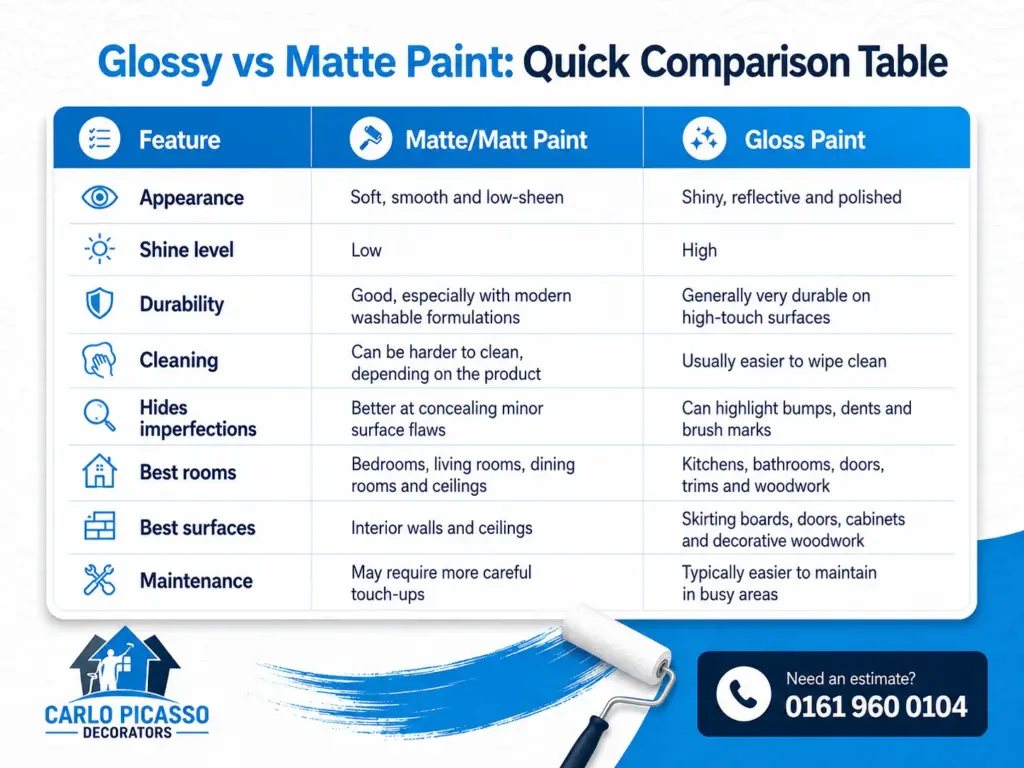
The main difference between matte and gloss paint is how much light each finish reflects. Matte (or matt, in UK spelling) has a flat or low-sheen appearance that reflects very little light, whereas gloss paint has a much shinier, more reflective finish.
Because of its softer appearance, matt paint is a popular choice for walls and ceilings. It also helps hide small imperfections, making it particularly useful in bedrooms, living rooms and older properties where walls may not be perfectly smooth.
Gloss paint, meanwhile, is generally better at handling moisture, stains and frequent cleaning. As a result, it is commonly used on skirting boards, doors, trims, cabinets and other surfaces that receive a lot of contact. The trade-off is that its reflective finish can draw attention to uneven surfaces or poor preparation.
Neither finish is automatically the right choice in every situation. Instead, the decision depends on what you are painting, how the room is used and the overall look you are aiming for.
Semi-matte sits between flat matt and higher-sheen finishes. It has a gentle sheen that offers a softer look than gloss while remaining easier to clean than very flat matt paint.
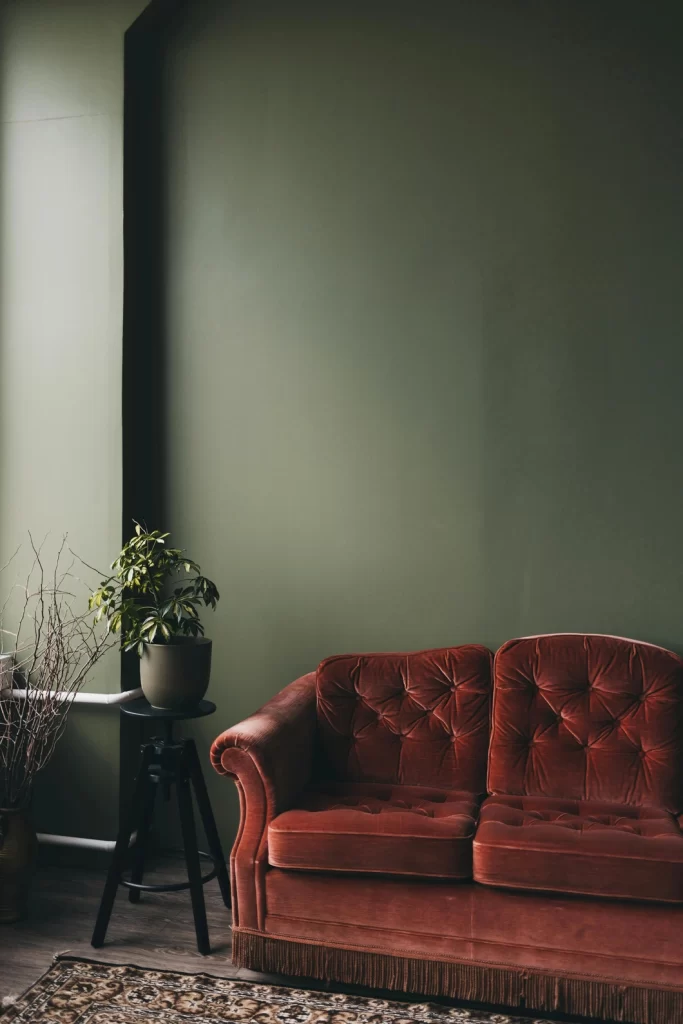
For those who like the appearance of matt paint but want something a little more practical for everyday use, semi-matte can be a useful middle ground. Depending on the manufacturer, it may be similar to finishes labelled eggshell, low-sheen or satin.
As a result, this finish works well in hallways, family living spaces and other areas where you want a balance between appearance and durability.
For a more detailed explanation of paint sheen levels, this paint finishes guide provides useful information.
Knowing when to use matte and gloss paint makes it easier to choose a finish that not only looks right but also performs well over time.

Choose matt paint when you want a soft, elegant finish with very little reflection. It is particularly well suited to interior walls and ceilings where a calm, understated look is preferred.
Matt paint is commonly used in bedrooms, living rooms, dining rooms and other lower-traffic spaces. It is also a smart choice for surfaces with minor imperfections, as the low-sheen finish helps disguise them.
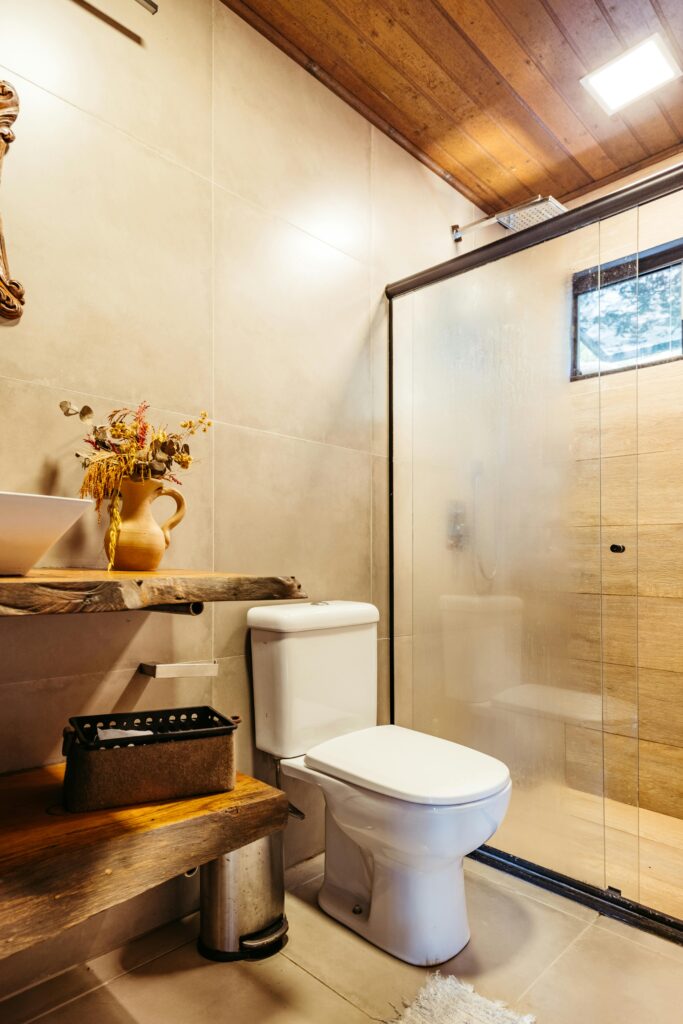
Choose gloss paint when durability and easy cleaning are top priorities. It works especially well on surfaces that are touched often or exposed to moisture and everyday wear.
For this reason, gloss paint is a popular option for doors, skirting boards, trims, cabinets and some kitchen or bathroom woodwork. It can also help decorative details stand out, although good preparation is essential because the shine tends to highlight flaws.
Different rooms place different demands on paint, so the most suitable finish can vary from space to space.
If you are unsure, consider how much moisture, wear and cleaning the surface will need to withstand, along with the condition of the surface underneath.
Yes, the finish can change how a colour looks once it is on the wall. Matt finishes scatter light, which often makes colours appear softer and more muted. Gloss finishes reflect more light, so colours can seem brighter and more vibrant.
Lighting also plays a major role. In rooms with plenty of natural light, gloss finishes can appear much more noticeable because of the extra reflection. In darker spaces, matt finishes often create a softer, more understated effect.
That is why tester pots can be so useful. A colour can look quite different throughout the day as the light changes, and the finish you choose can make those differences even more noticeable.

Choosing between matt, semi-matte, eggshell, satin and gloss is not always straightforward. The right finish depends on the room, the condition of the surface, the lighting and how durable the paint needs to be.
Carlo Picasso Decorators can help you select the most suitable finish for each room and ensure surfaces are properly prepared before painting. We provide professional painting and decorating services across Bury, Bolton and the surrounding areas.
Whether you are updating a single room or planning a larger decorating project, we can tailor our services to suit your requirements. You can also view our residential gallery to see examples of previous work.
Contact our team today to discuss your project.


